
Eye doctors specialize in the anatomy, physiology, and diseases of the human eye, and they diagnose and treat a range of conditions. Because they understand how vision impacts your daily quality of life, they use specialized tools to assess your optical health. You can schedule an initial appointment for a routine checkup, and the doctor will examine your eyes for potential medical issues. Here is what to expect during your first visit:
Medical History Review
Before starting the vision test, the doctor may gather your medical history to understand your overall health and any factors that may affect your eyesight. They might ask about any past eye conditions, surgeries, or injuries, as well as whether you’ve experienced symptoms such as blurry vision, headaches, or eye strain.
Your family’s medical history is also significant, as certain eye conditions, such as glaucoma or macular degeneration, can have a genetic component. The doctor may ask whether anyone in your family has had these issues or other chronic conditions, such as diabetes, that can affect vision. By taking the time to discuss your medical background, the doctor can provide a more accurate diagnosis and effective treatment plan.
Vision Measurement Exercises
Technicians typically begin the exam process by using automated machines to gather baseline data about your eyes. You look into a specialized instrument, and it measures how light changes as it enters the pupil. While the machine performs the measurement automatically, you must sit still to allow for accurate preliminary readings. Another standard procedure involves a quick puff of air directed onto the surface of the eye.
Lettered Charts
Most patients recognize the standard wall chart containing rows of black letters that decrease in size. This is a standard chart, and it evaluates your visual acuity at a specific distance from the wall. Because this tool is used by optometrists, it provides a universal metric for how well you see distant objects.
The eye doctor typically asks you to cover one eye, and this is done so they can test each individual eye for clarity. While you read the chart aloud, the doctor listens for any hesitation with specific letters or numbers. You might struggle with the bottom rows.
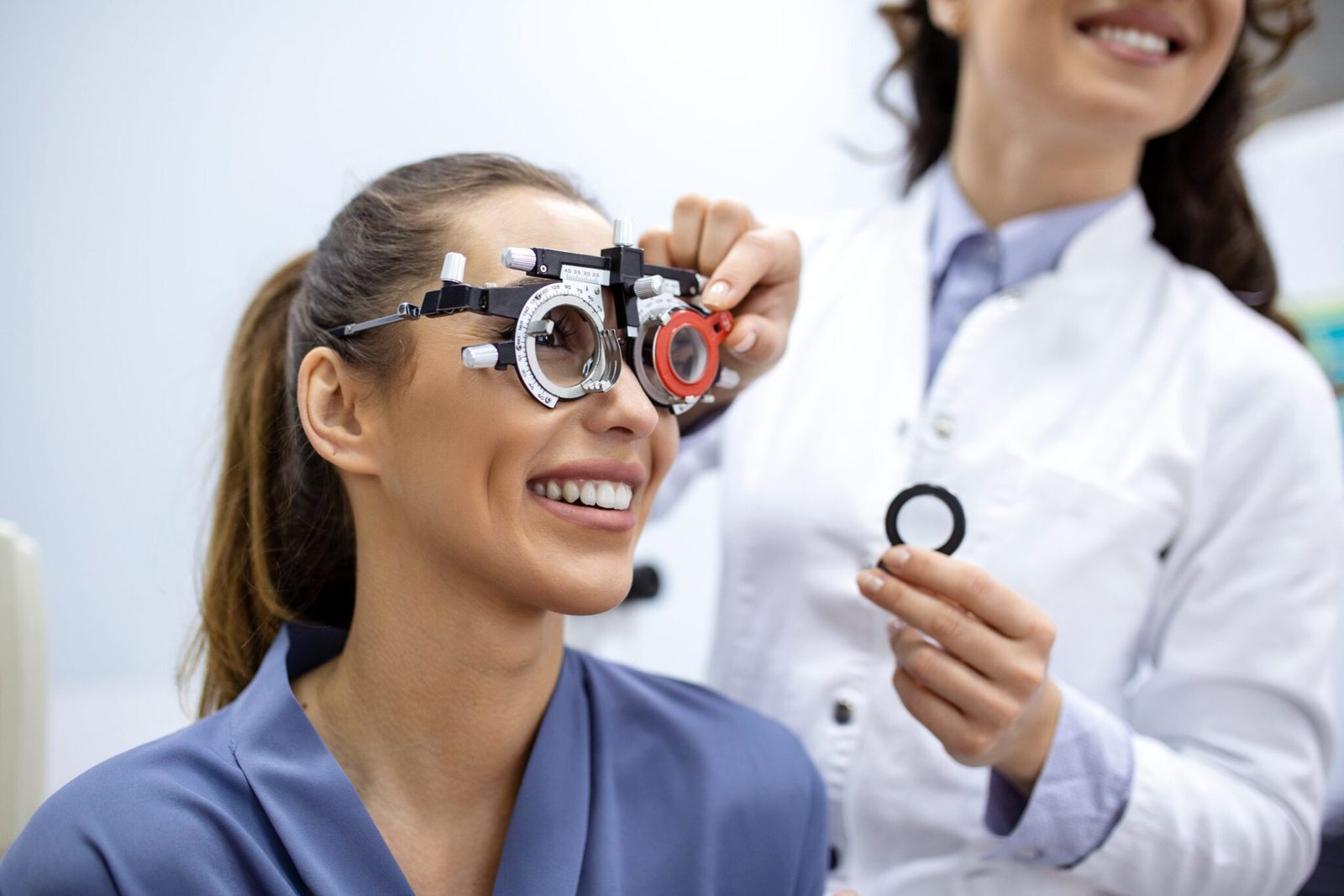
The phoropter is a large, mask-like instrument that the doctor places directly in front of your face. The doctor switches between different lenses, so you must choose which one looks clearer to your eyes. Because your feedback guides the final prescription, you need to answer honestly about what you see clearly.
Peripheral Vision
Your side vision detects motion and objects that are not located directly in front of your gaze. Standard targets used during this evaluation include:
- Moving fingers
- Flashing lights
- Waving lines
While these tests are simple, they map out the full scope of your functional visual field. The doctor moves objects to the side, and you indicate when you see them appear in view.
Guided Treatment Plans
After the testing phase concludes, the doctor reviews all the gathered data regarding your eye health. They explain the findings in detail, and they suggest a plan to correct any refractive errors. Since the results are specific to you, this discussion outlines the next steps for your eyewear needs.
Visit an Eye Doctor
Regular eye exams are key to maintaining optimal vision and detecting potential issues early. They help identify concerns that might not have obvious symptoms, such as glaucoma or macular degeneration, promoting timely intervention. When you prioritize your eye health with a professional evaluation, you’re taking a significant step toward preserving your sight.
Leave a Reply