
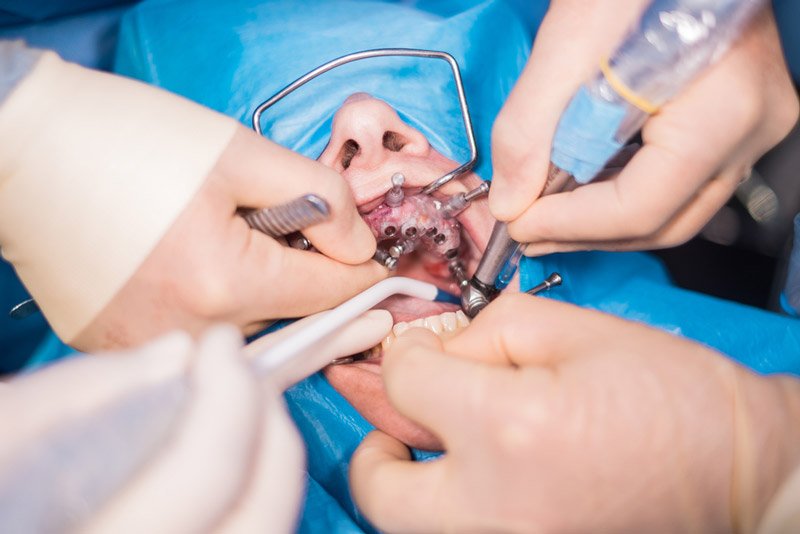
Oral surgery refers to any surgical procedure performed in or around your mouth and jaw. These procedures offer solutions for dental problems that cannot be resolved through less invasive treatments. Many different conditions might require an oral surgery procedure for treatment. Some surgeries help manage pain, while others restore normal function to your teeth and jaws. Here are some of the types of oral surgery procedures and when they’re needed:
Tooth Extractions
Sometimes, a dentist cannot save a tooth, so it must be removed. Deep cavities, advanced gum disease, and fractured teeth all lead to extractions, and severe decay or trauma might damage a tooth beyond repair. Extraction prevents the spread of infection to other teeth when a tooth is severely damaged. Your dentist can determine if an extraction is the right course of action for your situation.
One reason for tooth extraction is impacted wisdom teeth. These teeth may grow in at an angle, and they may not have enough room to emerge properly. Infections may develop around partially erupted wisdom teeth. Wisdom teeth that do not emerge fully can cause pain and damage to adjacent teeth. Removing them may help maintain the alignment and health of your other teeth. After the removal, gentle aftercare helps minimize pain and promote healing.
Some orthodontic treatments require tooth extractions. Extractions create space for teeth to move into proper alignment, so the remaining teeth can be straightened effectively. This oral surgery procedure helps prepare the mouth for braces or other orthodontic devices. Sometimes, removing teeth helps correct your bite or jaw alignment for better results.
Tooth Implants
Tooth implants provide a foundation for replacement teeth. The implant is a small post that fuses with your jawbone. For stability and restoring full chewing ability, dental implants may replace one or several missing teeth. This process creates a stable base for a crown, which looks and functions like a natural tooth. You will need healthy gums and adequate bone to support the implant. Some patients may require bone grafts to build up the jaw before implant placement.
Your dentist will place the implant into the bone socket of the missing tooth. The jawbone grows around the implant, securing it in place over a period of months. Once the implant has bonded with the jawbone, a small connector post is attached to hold the new tooth. Porcelain or ceramic crowns may be chosen for their durability and lifelike appearance.
Root Canals
A root canal treats issues within the soft pulp of a tooth, and this might save a tooth that would otherwise require extraction due to infection. The procedure removes the infected or inflamed pulp. Before it is filled and sealed, the inside of the tooth is cleaned and disinfected. X-rays help the dentist see the tooth’s internal structures and guide treatment. This treatment can save a natural tooth from extraction. Some signs that you may need a root canal are:
- Severe tooth pain
- Prolonged sensitivity to heat or cold
- Swollen gums
Schedule Oral Surgery Today
By learning about treatment options, you make informed choices about your dental care. Recovery times and follow-up instructions vary by procedure, so ask your provider for detailed guidance. Speak with your dental provider to discuss your specific needs. Contact a dental clinic to schedule a consultation and learn more about your options.
Leave a Reply