
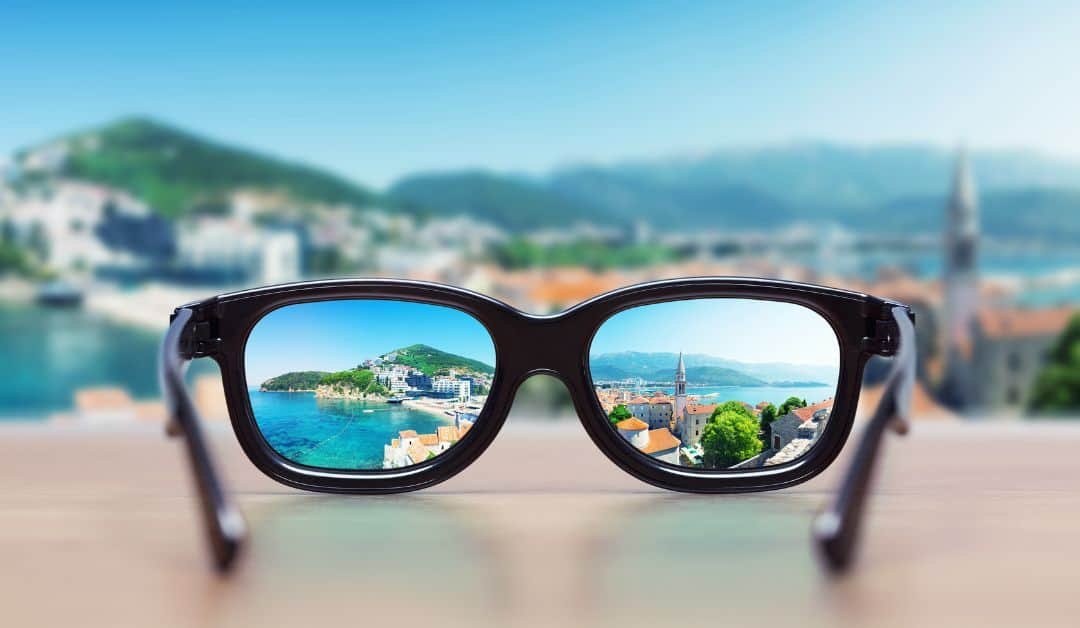
Eye glasses are an effective method for vision correction, and they offer a reliable solution for refractive errors. Modern technology provides various customization options regarding lens materials and designs. Understanding these choices allows patients to enhance their visual experience and maintain ocular health.
What Are Eye Glasses?
Eye glasses are optical devices consisting of glass or hard plastic lenses mounted in a frame. These frames hold the specific lenses in front of a person’s eyes, and a bridge usually rests over the nose. The primary function is to bend light rays so they focus properly on the retina.
Frames are constructed from various materials to suit different lifestyles and aesthetic preferences. Some patients benefit from choosing durable metal frames for longevity, while others select lightweight plastics for comfort. The lenses within these frames are ground to a specific curvature based on the prescription determined during an eye exam.
What Conditions Do They Treat?
Glasses correct common refractive errors that cause blurry vision at various distances. Nearsightedness, or myopia, makes distant objects look blurry, but close objects often remain clear. Farsightedness, or hyperopia, causes the opposite effect, and near objects appear out of focus. Corrective lenses adjust the focal point of light entering the eye to compensate for these shape irregularities.
Astigmatism results from an irregularly shaped cornea or lens inside the eye. This condition distorts vision at all distances, so objects may appear stretched or wavy. Glasses with cylindrical lens correction address this issue by refracting light in a specific meridian. This allows for a sharper image on the retina regardless of the object’s distance.
What Are the Lens Options?
Modern lens options often utilize lightweight plastics for increased safety. Polycarbonate lenses are impact-resistant and a beneficial choice for active individuals or children. High-index plastic lenses refract light more efficiently, so they are thinner and lighter than standard lenses for strong prescriptions. Trivex is another material similar to polycarbonate, offering slightly better optical quality.
Lens designs vary based on the number of focal points required for correction. Single vision lenses correct one field of vision, such as distance or near work. Bifocals contain two distinct optical powers, and a visible line separates the distance and near segments. Trifocals add a third section for intermediate vision, which assists with tasks like computer work.
Progressive lenses offer a smooth transition between multiple focal points without visible lines, providing a natural visual experience. Photochromic lenses darken automatically when exposed to sunlight, so they function as sunglasses outdoors. Protective coatings enhance the performance and longevity of lenses. Anti-reflective coatings reduce glare from screens and headlights, and scratch-resistant coatings increase durability.
What Are the Benefits?
Wearing glasses provides immediate visual correction without the need for surgical intervention. They protect the eyes from environmental debris such as wind and dust, and this protection may reduce the risk of irritation or injury during daily activities. Unlike contact lenses, glasses do not require direct contact with the eye surface. Regular use helps prevent eye strain and headaches associated with uncorrected refractive errors.
Enhance Your Vision Today
Choosing the correct lenses involves understanding your prescription and lifestyle needs. A comprehensive eye exam determines the specific refractive error, and an ophthalmologist recommends appropriate corrective measures. Schedule a consultation with an eye care specialist today.
Leave a Reply