
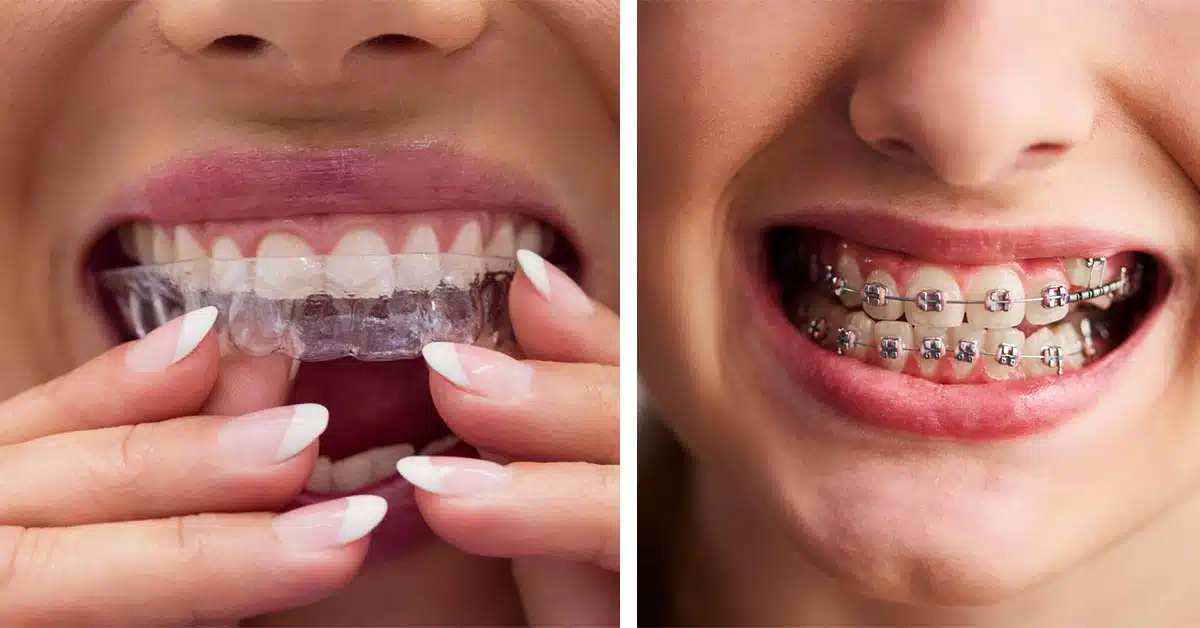
Invisalign and traditional braces guide teeth into new positions by applying steady, controlled force. Each system follows a structured orthodontic plan, and treatment time is often comparable. Braces use metal or ceramic brackets connected by wires that are adjusted at routine intervals. Invisalign uses a series of custom plastic trays that fit closely around the teeth and shift them in small, planned increments. Both options can address crowded, crooked, or spacing concerns, as well as specific bite issues such as overbite, underbite, crossbite, and overjet.
What is Invisalign?
Invisalign trays are made from a smooth, transparent material created to match each stage of a treatment plan. They must be worn for most of the day and be removed only when eating or drinking anything other than plain water. Attachments may be placed on the teeth to help each tray grip properly, allowing the aligners to move teeth with greater accuracy. The orthodontist provides new trays once the teeth have completed the previous stage of movement. Each new tray’s shape guides the teeth to the next step in the movement plan.
Daily routines change slightly when using aligners because the trays must stay clean to remain effective. Brushing after meals and keeping aligners in a case keeps them safe when not in use. Mild tenderness may occur when switching to a new set, but it usually improves within a short period. Because the trays are removable, eating at meals proceeds as usual, as long as teeth are brushed before reinserting the aligners.
What are Traditional Braces?
Braces use brackets bonded to each tooth, and wires thread through them to deliver steady pressure. Adjustments occur during scheduled visits to fine-tune the direction and amount of movement. Wax can help with discomfort if the brackets feel irritating, and soft foods are often helpful during the first few days after an adjustment. The structure of braces keeps them active at all times, making them effective for a wide range of orthodontic needs.
Daily care includes brushing around the brackets and using tools that reach between wires and teeth. Some foods can damage brackets or bend wires, so dietary changes may be necessary. On occasion, a loose bracket or poking wire may require an extra appointment, though many issues are quick to address. Routine visits keep tooth movement on track.
When Is Invisalign Preferred?
Invisalign can offer advantages for people who want a more discreet way to straighten their teeth without fixed hardware. The transparent trays blend with the natural appearance of the teeth, and the wearer can remove them for meals and brushing. The absence of brackets and wires may also reduce common concerns such as broken components or wire irritation.
Clear aligners may be suitable for mild to moderate alignment needs, including crowding, spacing issues, and specific bite concerns. Consistent wear enables the trays to progress toward improved alignment. Regular check-ins provide additional sets of aligners and allow the orthodontist to monitor progress.
Learn More About Invisalign
Braces and Invisalign both move teeth with measured changes, and they often do so within similar timeframes. Their differences are mainly in daily routines, care requirements, and how each system guides movement. Invisalign may be a better fit for those who prefer a low-profile option that supports usual hygiene habits and no dietary changes. To learn more about Invisalign, consult your orthodontist.
Leave a Reply