
Teeth play a major role in our daily life, even if we don’t think about them often. Every time we eat, talk, smile, or laugh, we use our teeth.
They not only help us break down food but also support the shape of our face. However,Humans have two sets of teeth in their lifetime: baby teeth and adult teeth. babies have 20 and adults have 32 teeth but why does the number change as we grow. Understanding these differences helps us take better care of our oral health.
In this article, we explore how many teeth we have, how they grow, what they are used for, and why some people have more or fewer teeth than others.
How Many Teeth Do Humans Have?
Human beings have two sets of teeth: baby teeth and adult teeth. Baby teeth are also called milk teeth or primary teeth, and these are the ones children grow in early childhood. Adults later develop a new set of permanent teeth that replace the baby teeth. On average, children have 20 baby teeth, while adults usually have 32 permanent teeth. However, some adults do not have all 32 teeth because the wisdom teeth may not grow or may be removed. So the number can range from 28 to 32. The difference in numbers happens mainly because of the wisdom teeth, which are the last to appear and often cause problems.
Baby Teeth: The First Set
Baby teeth start appearing when a child is about six months old. At first, a child has no teeth, but slowly, the lower front teeth begin to appear. Over time, more teeth grow in until the child has a complete set of 20. These teeth are very important because they help children chew food, learn to speak clearly, and maintain space for the future permanent teeth. Baby teeth are smaller and whiter than adult teeth. They eventually fall out naturally to make room for the new teeth. This process usually starts around age six and continues until about age 12 or 13.
Adult Teeth: The Permanent Set
Adult teeth replace baby teeth, and once they come in, they are meant to last for life. Most adults have 32 teeth if all the wisdom teeth grow properly. These permanent teeth are stronger, larger, and more durable than baby teeth. Adult teeth come in stages, and the front teeth usually appear first. By age 12 or 13, most children already have all their adult teeth except the wisdom teeth. These last molars may appear anytime between ages 17 and 25, or sometimes never at all. Permanent teeth are important for chewing tougher foods, maintaining proper jaw alignment, and supporting facial structure.
The Four Types of Adult Teeth
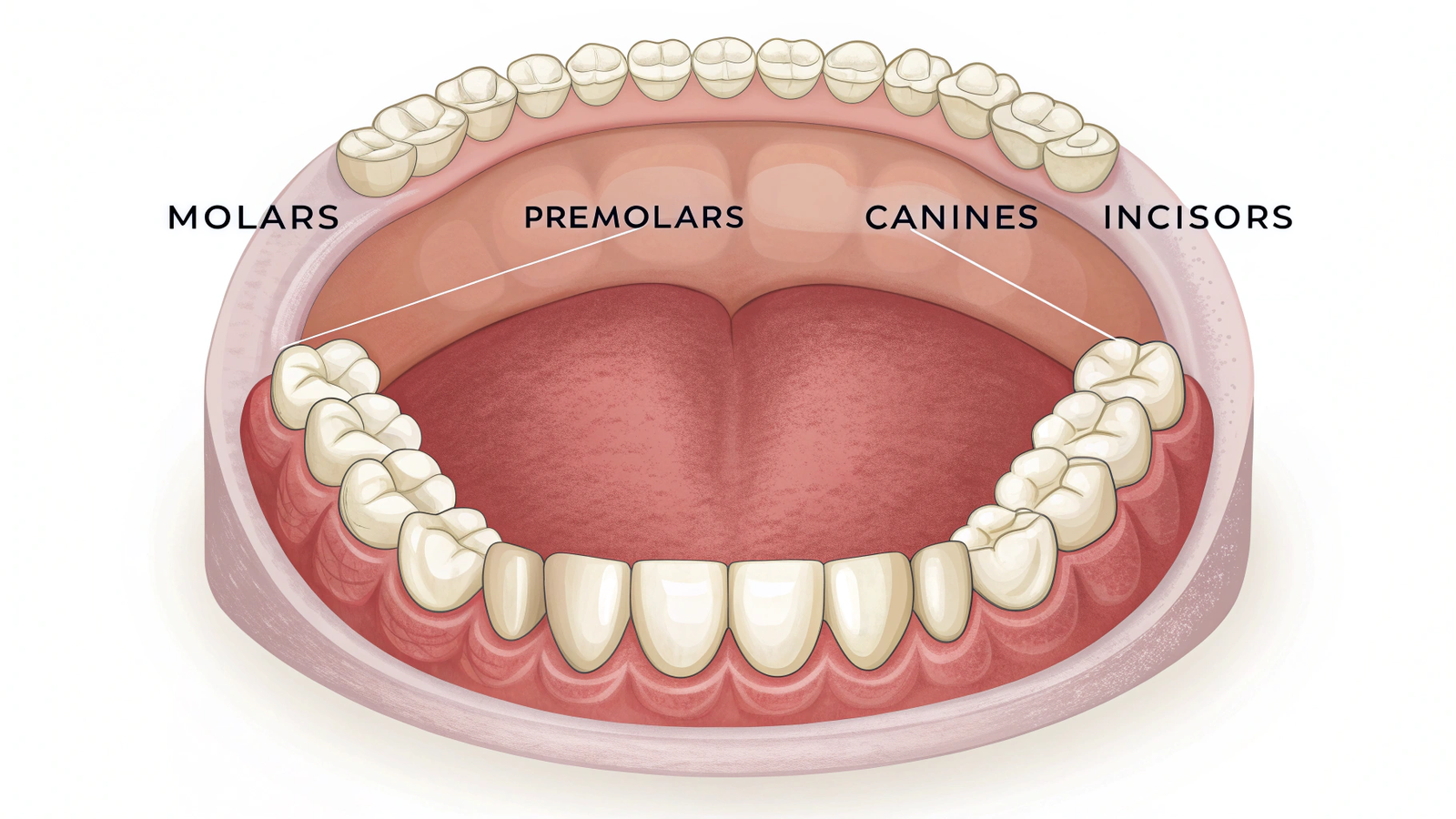
Adult teeth are not all the same. They come in four main types, each with a special job. The first type is incisors, which are the front teeth that help cut food. These are the teeth you use when you take a bite of something. Then come the canines, which are sharp and pointed. Canines help tear food and give shape to the mouth. After canines, we have premolars, which are wider and help crush food. Finally, molars are the strongest teeth, found at the back of the mouth. They help grind and chew food completely. Wisdom teeth are part of the molar group. All these teeth work together to make chewing easy and effective.
Why Do Children Have Only 20 Teeth?
Children’s mouths are smaller than adult mouths, so they cannot fit 32 teeth. That is why nature gives them only 20 baby teeth. These smaller teeth help them chew and speak until they grow older. Baby teeth also serve as guides to show adult teeth where to grow. When a baby tooth falls out, it opens space for the new permanent tooth to come in. Without baby teeth, permanent teeth would not grow in the right position, which could cause crooked teeth or difficulty chewing later. So even though baby teeth fall out, they play a very important role.
Why Do Adults Have 32 Teeth?
Adults have larger jaws and need more teeth to chew a wide variety of foods. That is why the permanent set includes 32 teeth. The extra teeth, especially molars and premolars, help break food into smaller pieces so the body can digest it easily. The adult mouth has enough space to fit four wisdom teeth, which usually appear last. In earlier times, human diets were rough and required more chewing, so wisdom teeth were helpful. Today, our diets are softer, and many people do not have enough room for these teeth, which is why they are often removed.
What Are Wisdom Teeth?
Wisdom teeth are the third molars that usually appear between ages 17 and 25. They are called “wisdom” teeth because they come in when a person is older and considered wiser. However, many people do not grow all four wisdom teeth. Some grow only one or two, and others may grow none at all. Wisdom teeth often cause pain or swelling because there is not enough space in the mouth for them. They may grow sideways or get stuck under the gums. In such cases, dentists recommend removing them. Not having wisdom teeth does not affect chewing or speech, so removal is safe.
Why Do Some People Have Fewer or More Teeth?
Not everyone has the same number of teeth. Some people naturally do not grow all their teeth due to genetics. Others lose teeth because of injury, gum disease, or decay. Some people may even have extra teeth, called supernumerary teeth. These extra teeth usually appear in the upper jaw and can affect the alignment of other teeth. Dentists can remove extra teeth if needed. Missing or extra teeth do not always cause problems, but regular check-ups help manage them properly. The number of teeth a person has depends on many factors, including family history, oral health habits, and sometimes even nutrition during childhood.
How Teeth Grow and Fall Out?
Teeth grow in stages, starting from inside the gums. Baby teeth begin forming even before a child is born, but they only appear months later. These teeth stay in the mouth until the permanent teeth push them out. This natural process is called tooth exfoliation. When a baby tooth becomes loose, it means the adult tooth is ready to come in. As the adult tooth grows upward, it slowly dissolves the root of the baby tooth, making it fall out. This is why baby teeth come out easily and cause little pain. The cycle continues until all permanent teeth appear.
Importance of Taking Care of Teeth
Whether you have baby teeth or adult teeth, taking care of them is very important. Healthy teeth help you chew food properly and speak clearly. They also keep your smile bright and prevent painful dental problems. Brushing your teeth twice a day, flossing daily, eating a balanced diet, and visiting the dentist regularly help protect your teeth. Even wisdom teeth need attention, especially if they cause discomfort. Proper dental care ensures your teeth last a long time and stay strong as you age.
Common Dental Problems Related to Teeth Count
When teeth do not grow in the correct number or position, dental problems may develop. Crowding happens when there is not enough space for all teeth to fit. Spacing problems occur when teeth are missing or too small, leaving gaps. Misalignment means the teeth are not straight, which can affect chewing and speaking. Tooth decay or cavities are also common if teeth are not cleaned properly. Early dental care can prevent most of these issues. Dentists may use braces, retainers, or fillings to correct problems and help maintain a healthy smile.
How Diet Affects Teeth Health?
The food you eat has a strong effect on your teeth. Sugary foods can cause cavities because bacteria in the mouth feed on sugar and create acids that damage teeth. On the other hand, foods like milk, cheese, fruits, and vegetables help strengthen teeth and gums. Drinking plenty of water also keeps your mouth clean. Crunchy foods help clean teeth naturally, while acidic foods can weaken enamel if eaten too often. A healthy diet supports strong teeth no matter how many you have.
Teeth and Overall Health
Teeth are not only important for the mouth but also for the whole body. Poor dental health can lead to infections, gum disease, and even heart problems. Chewing food properly helps digestion, and healthy teeth make this easier. People with missing teeth may have difficulty eating certain foods, which affects nutrition. Taking care of teeth helps improve both oral and overall health. Dentists often say that the mouth is a mirror of the body because many health problems show signs in the gums or teeth.
Fun Facts About Human Teeth
Teeth are the hardest substance in the human body because of the enamel that covers them. Just like fingerprints, everyone has a unique set of teeth. Even twins do not have the exact same tooth pattern. Teeth cannot heal themselves if damaged, which is why brushing and dental care are important. Baby teeth begin forming before birth, even though they appear later. Also, sharks grow new teeth throughout their life, but humans only get two sets. These interesting facts show how special and important our teeth are.
Conclusion
Teeth are a valuable part of our body, helping us eat, talk, and smile with confidence.
Humans have two sets of teeth in their lifetime: 20 baby teeth and up to 32 adult teeth. The number may change depending on wisdom teeth or individual differences. Understanding how many teeth we have and how they grow gives us better insight into oral health. Taking good care of our teeth ensures they last a long time and stay strong.
Whether you are young or old, healthy teeth help improve your quality of life. With proper care, regular check-ups, and good habits, you can maintain a beautiful smile and strong teeth throughout your lifetime.
FAQs
1. How many teeth do adults usually have?
Most adults have 32 teeth, including four wisdom teeth. If wisdom teeth are removed or do not grow, the number may be 28. This depends on individual mouth size and dental health.
2. How many baby teeth do children have?
Children have 20 baby teeth. These teeth appear between ages six months and three years. They fall out gradually as permanent teeth grow in.
3. At what age do baby teeth fall out?
Baby teeth usually start falling out around age six. The process continues until about age 12 or 13. Each child’s timing may be slightly different.
4. Do all adults get wisdom teeth?
Not all adults grow wisdom teeth. Some may grow all four, some may grow fewer, and some may not grow any at all. This depends on genetics and jaw size.
5. Why do wisdom teeth cause problems?
Wisdom teeth cause problems when there is not enough space in the mouth. They may grow sideways, get stuck, or cause pain. Dentists often remove them to prevent issues.
6. Can a person have extra teeth?
Yes, some people have extra teeth called supernumerary teeth. They can affect alignment and may need removal. This condition is usually found through dental X-rays.
7. Why do adults have more teeth than children?
Adults have larger mouths and need more teeth for chewing. That is why permanent teeth include more molars and premolars. Baby teeth are smaller and fewer because children’s jaws are smaller.
8. What happens if a baby tooth does not fall out?
If a baby tooth does not fall out on time, it may block the adult tooth. A dentist may remove the baby tooth to allow proper growth. Early check-ups help avoid problems.
9. Are teeth bones?
Teeth are not bones, but they are similar. They are made of enamel, dentin, and pulp. Enamel is harder than bone, but teeth cannot heal themselves like bones.
10. How can I keep my teeth healthy?
Brush twice a day, floss daily, avoid too much sugar, and visit the dentist regularly. Eating healthy foods and drinking water also helps protect teeth from decay.
Leave a Reply