
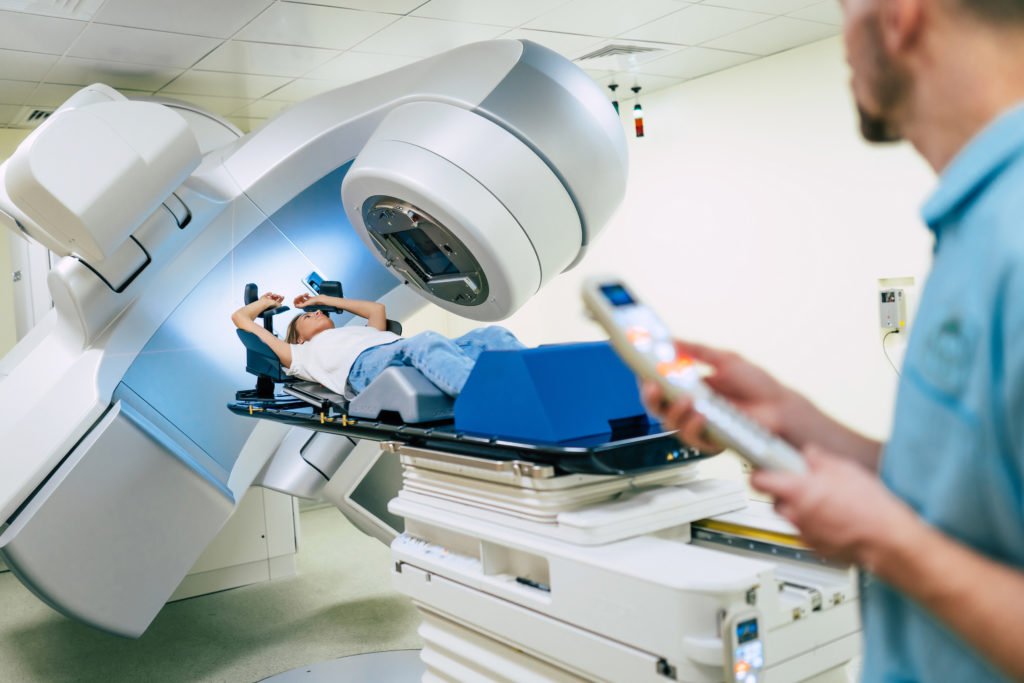
Radiation therapy employs high-energy particles or waves to effectively treat various diseases. Doctors use this method to target specific areas of the body. While a treatment team plans the procedure, the patient receives radiation over a set period. This approach is a standard component of many treatment plans. Here is more information about the different types of radiation methods:
Intensity-modulated Radiation Therapy
Intensity-modulated radiation therapy (IMRT) is a precise form of treatment. Computers control the radiation beam’s intensity, so doctors shape the dose to match the target area. This technique enables the use of different radiation strengths within a single beam, and it aims to protect nearby healthy tissues from high doses of radiation.
The machinery directs many small beams toward the treatment area. Each beam’s intensity is adjusted, and this results in a sculpted dose distribution. Because the process is highly detailed, planning for IMRT is often complex and requires specialized software. The treatment team works to create a plan that delivers a powerful dose to the target while minimizing damage to surrounding structures.
This therapy involves a machine that rotates around you during treatment. You will lie still on a table while the machine delivers radiation from various angles. The process is painless, and it usually takes less than 30 minutes. Your care team will position you correctly before each session begins.
Stereotactic Body Radiation Therapy
Stereotactic body radiation therapy (SBRT) delivers high doses of radiation to the target area. It targets small, well-defined tumors with extreme precision, promoting accurate treatment and minimizing damage to surrounding tissue. Because SBRT uses very focused beams, it completes therapy in fewer sessions than standard methods.
SBRT requires advanced imaging techniques to accurately locate the tumor. You might need to undergo special scans prior to starting treatment.. These images create a 3D map for targeting, and this map guides the radiation beams during each session.
Image-guided Radiation Therapy
Image-guided radiation therapy (IGRT) uses imaging during the treatment process. Doctors take pictures of the target area just before giving the radiation dose, and they compare these new images to the ones used for planning. This comparison lets them make minor adjustments for movement or changes in tumor size. The goal is to improve the precision of the radiation delivery each day.
Volumetric Arc Therapy
Volumetric arc therapy (VMAT) delivers radiation in a continuous arc of motion. The treatment machine rotates around you, and it provides the dose as it moves. When the beam shape and intensity change throughout the rotation, it allows the dose to conform closely to the shape of the target area.
2D and 3D CRT
2D and 3D conformal techniques are established methods for delivering treatment.
- 2D CRT: Uses two-dimensional images, like X-rays, to plan treatment.
- 3D CRT: Uses three-dimensional scans to create a more detailed plan.
In 3D CRT, beams are shaped to match the tumor, which helps limit exposure to healthy tissue. Although more advanced methods exist, these foundational therapies are still used because they offer a more targeted approach than older 2D techniques.
Schedule Radiation Therapy
Learning about different therapies helps you prepare for your appointments. Each type of radiation has a specific purpose and process. Your care team can explain the selected approach and answer any questions you may have about your treatment plan. Contact an oncology clinic today to schedule a consultation with a radiologist.
Leave a Reply