
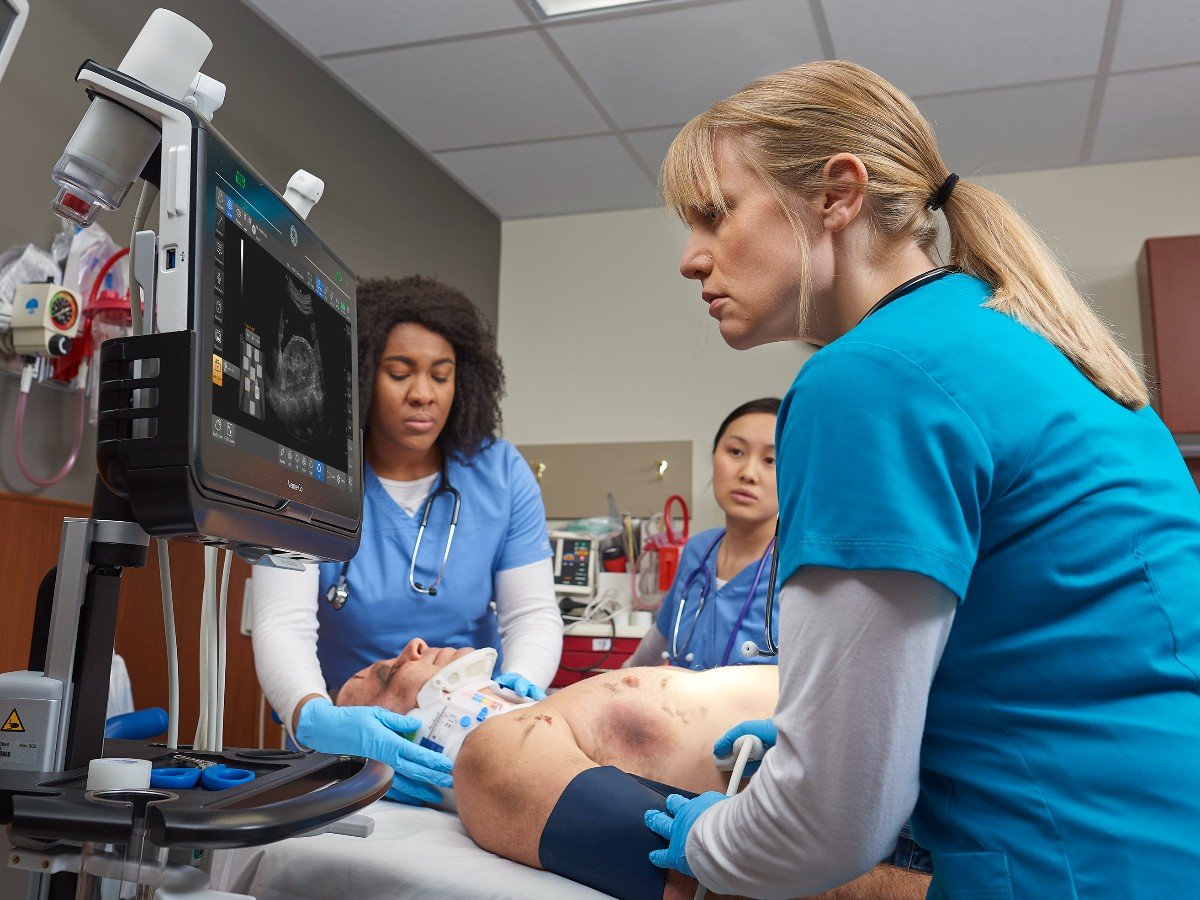
Ultrasound serves as a primary diagnostic tool in emergency medicine. It provides real-time imaging, and clinicians use it to support rapid clinical decisions. Because ultrasound does not require ionizing radiation, it allows immediate bedside assessment and avoids delays. The technology applies across many clinical scenarios. Providers use it for soft tissue evaluation and for life-threatening conditions such as shock or respiratory failure. When clinicians combine ultrasound findings with physical exams, diagnostic accuracy improves, and treatment planning occurs more quickly.
Diagnostic Applications
Ultrasound allows dynamic visualization of internal structures. Unlike static imaging, it shows movement in real time. Because clinicians can observe tissue motion directly, ultrasound helps identify abnormalities that static images may miss. In musculoskeletal evaluations, providers assess joints, tendons, and muscles. They can identify muscle tears, tendon ruptures, and subtle fractures, and these findings guide immediate care decisions.
Cardiac ultrasound supports rapid assessment of heart function. Clinicians evaluate ventricular performance and detect pericardial effusions. When patients show signs of instability, these findings assist in determining fluid status, and they guide resuscitation efforts. Thoracic ultrasound is also helpful. Providers detect pneumothorax, pleural effusion, and pulmonary edema by evaluating lung sliding and characteristic artifacts. Because standardized lung protocols exist, clinicians can quickly distinguish cardiac from pulmonary causes of respiratory distress.
Abdominal ultrasound supports emergency evaluation of acute conditions. Providers identify gallstones, wall thickening, and free fluid. In trauma settings, focused examinations detect intraperitoneal bleeding, pericardial fluid, and thoracic injury. Because data is obtained rapidly, clinicians can determine whether surgery is necessary, and they can decide if advanced imaging is required.
Efficiency and Safety
Ultrasound equipment offers portability. Many systems are handheld, and they function without reliance on imaging departments. Because clinicians can bring the device to the patient, assessment occurs immediately, and unstable patients avoid transport risks. This accessibility proves valuable in ambulances, remote facilities, and crowded emergency departments.
It maintains a strong safety profile. It uses sound waves instead of radiation, and this allows repeated examinations without cumulative exposure. Because of this feature, it suits pediatric patients, pregnant individuals, and those requiring frequent monitoring. The exam is non-invasive.
Ultrasound also supports cost efficiency. Equipment costs remain lower than CT or MRI systems. When bedside imaging narrows diagnoses early, hospitals reduce unnecessary testing, and patient throughput improves. This efficiency shortens the length of stay and supports better resource allocation.
Procedures and Training
Ultrasound enhances procedural safety. Clinicians use real-time imaging to guide invasive procedures. These include central venous catheter placement, nerve blocks, thoracentesis, and joint aspirations. Because providers visualize both the needle and target, complication risk decreases, and success rates improve. Fewer attempts are required, and patient discomfort is reduced.
Medical training programs increasingly emphasize ultrasound education. Instruction focuses on image acquisition and interpretation. When clinicians develop proficiency, they integrate sonographic findings with clinical judgment more effectively. Advances in technology continue to expand access. Wireless probes and automated image analysis support use in prehospital care and in settings with limited resources.
Ultrasounds in Medicine
Ultrasound plays a helpful part in emergency medicine. It delivers immediate diagnostic information, and it supports rapid clinical decision-making. Because it is safe, portable, and cost-effective, ultrasound enhances patient care across multiple emergency scenarios. Continued integration into emergency workflows improves diagnostic efficiency, procedural safety, and overall outcomes in acute care environments.
Leave a Reply