
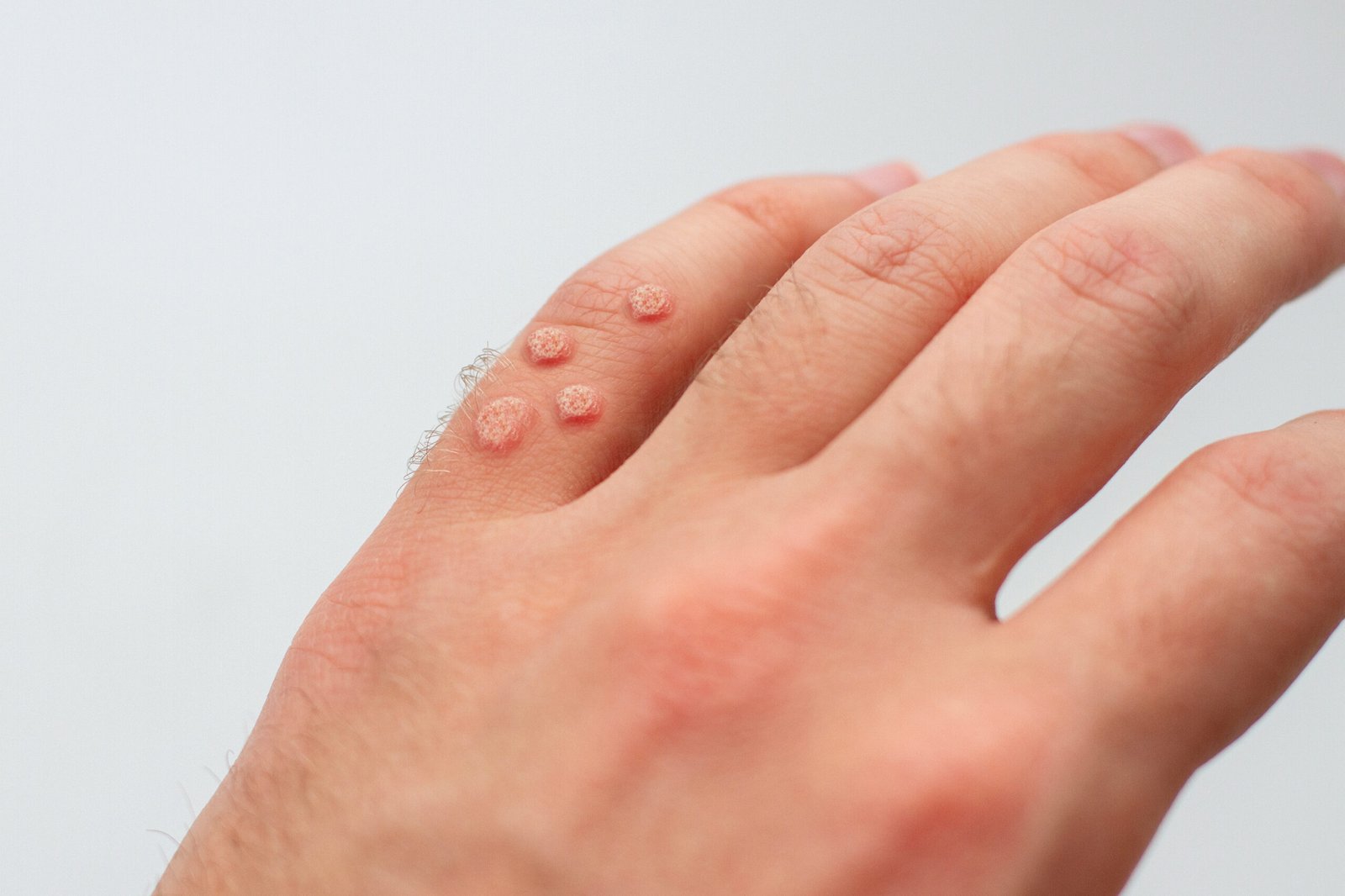
Warts are skin growths caused by the human papillomavirus (HPV). They are not harmful, but they can be uncomfortable or painful. This article explains the types, causes, and treatments for warts, providing a clear overview of the condition.
What Are Warts?
Warts are noncancerous growths that form on the skin or mucous membranes when HPV enters the body, and the virus can get in through small cuts or abrasions. Because HPV thrives in warm and moist environments, public places like locker rooms and pools are common sources of infection. They are contagious and spread through direct skin-to-skin contact or by sharing personal items such as towels and razors.
Anyone can get warts, but certain factors increase a person’s risk. Children and teenagers are more likely to develop them, and people with weakened immune systems or a history of warts are also more susceptible. Walking barefoot in public spaces significantly increases the risk of infection, so taking simple precautions is important. A specialist can help with prevention, treatment, and more.
What Are Types?
Warts differ in appearance and location depending on the HPV strain. They appear in many different ways. A few of the common symptoms include raised or inverted bumps, a change in size and color over time, sudden hair growth, or uncomfortable areas. Common types include:
- Common Type
- Plantar Warts
- Flat Warts
- Filiform Warts
- Genital Warts
- Mosaic
- Butcher’s Warts
They can also appear as small, fleshy, or grainy lesions. They can have a rough texture or a hard, calloused surface, especially on the feet. Small black dots, which are actually clotted blood vessels, may be visible.
What Are Treatments?
Warts sometimes go away on their own without treatment, but this process can take up to two years. For those that are painful, persistent, or spreading, several treatment options exist. Salicylic acid, used in over-the-counter products, dissolves them gradually, though it needs to be applied daily for months. Cryotherapy involves applying liquid nitrogen to freeze the area, leading to its eventual removal, but it may require multiple sessions. Cantharidin is a chemical applied by a medical professional that creates a blister underneath, cutting off its blood supply. Immunotherapy can help the immune system fight the virus, typically using a topical chemical to cause a reaction. Surgical removal involves cutting out the virus, although scarring may occur. Electrosurgery and laser treatments use heat or light to destroy tissue, and both may lead to scarring.
For prevention, avoid touching another person’s affected area and do not share personal items. Wearing protective footwear in shared areas like showers and pools can lower the chance of exposure. Keeping your skin moisturized and covering cuts or cracks in the skin is also important, since HPV can enter through broken skin.
Find A Specialist
Although they are not dangerous, they can cause discomfort and may be difficult to manage. A variety of treatments can effectively remove warts and relieve associated symptoms. By practicing good prevention, you can lower your risk of contracting the virus. If warts persist or cause significant pain, you should consult a healthcare provider for an accurate diagnosis and appropriate care.
Leave a Reply