
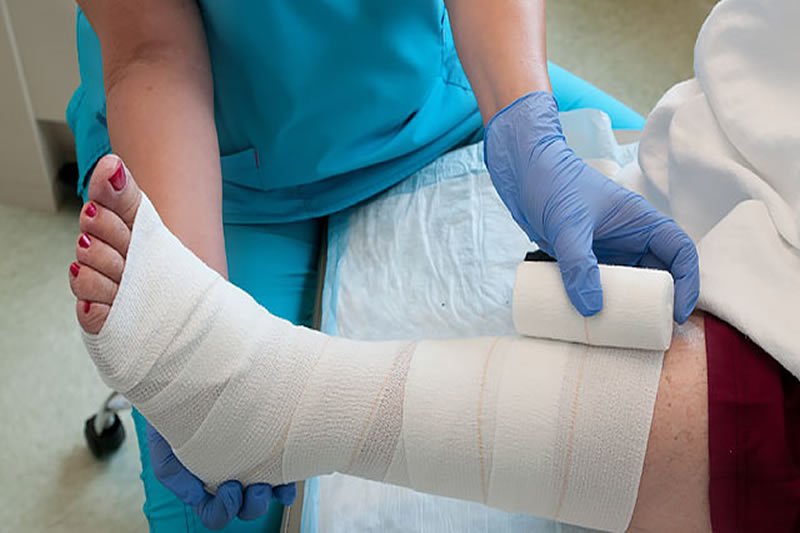
While the body is naturally equipped to heal itself, proper wound care helps the process progress with fewer complications. Doctors help patients manage injuries to prevent issues like chronic pain, infection, permanent scarring, or tissue necrosis. Here is more information about how to tell the difference between a minor injury that can be handled at home and a wound that requires professional intervention:
Treating Wounds at Home
Many small injuries are manageable without a trip to the clinic. You can treat minor cuts and scrapes using a standard wound care approach that focuses on cleanliness. Using the following steps can help the healing process:
- Wash your hands with warm water and antibacterial soap.
- Apply gentle pressure with a clean cloth if the area is bleeding.
- Clean the wound gently with warm water to remove any visible dirt or debris.
- Carefully pat the area dry with a sterile cloth.
- Apply an antiseptic ointment and dress the injury with sterile gauze or an adhesive bandage.
You can check the bandage at least once a day to monitor the site, changing the dressing if it becomes wet or dirty.
Seeking Professional Wound Care
Some injuries require a clinical evaluation to prevent long-term damage, such as large abrasions that cover a wide area or contain embedded dirt. If left untreated, severe abrasions can result in scarring. In these more advanced cases, a medical professional can clean the wound and provide instructions for further care at home. Lacerations involving jagged edges or deep tears in the skin also typically require a doctor to assess the tissue.
Puncture wounds may require medical attention even though they might not bleed much. These injuries carry a risk of internal damage and infection because bacteria can be pushed deep into the tissue by objects like nails or needles. High-impact injuries such as avulsions from gunshot wounds involve skin being torn away and always need immediate medical attention.
You should watch for signs of slow healing or worsening conditions over time. If the area becomes increasingly swollen, red, or painful, a doctor can determine if the injury has become infected. Professional care is necessary for wounds that worsen or do not show signs of improvement within a few days.
Evaluating the Need for Stitches
Determining if a cut needs stitches depends on several factors related to the size and depth of the injury. A laceration that is deep enough to expose the middle layer of the skin usually requires professional closure. You should seek help if the injury shows certain characteristics:
- There is visible fat, muscle, or bone through the opening.
- The edges of the wound stay apart when you are at rest.
- There is persistent bleeding that does not respond to ten minutes of direct pressure.
- The injury is located on a joint or on the face, where it may affect movement.
A professional assessment can help determine if a cut requires more than a simple bandage. Doctors use stitches or glue closures to reduce the risk of infection and minimize permanent scarring.
Learn More About Wound Care
Effective wound management prevents minor injuries from becoming major health issues. If you have a wound that is slow to heal or if you notice worsening symptoms like increased pain or swelling, professional support is available. Proper clinical care helps manage the recovery process and prevents complications like necrosis or chronic pain. For more information about wound care, consult a healthcare provider today.
Leave a Reply